QLD Pool Fencing Laws 2026 — What You Actually Need to Know
Wahoo Pool & Landscape ConstructionPool fencing law in Queensland is some of the strictest in the world. There's a reason: drownings in residential pools were a leading cause of accidental child death for decades, and the regulations exist specifically to prevent that.
If you're planning a pool, here's what you actually need to know about QLD pool fencing law in 2026 — with the specific dimensions and requirements that catch people out.
The basic rule
Every pool deeper than 300mm in Queensland must be surrounded by a compliant pool barrier. No exceptions. The barrier must be in place and certified before the pool is filled with water.
The dimensions that matter
QDC MP 3.4 (the QLD pool fencing standard) is detailed. The most important specifics:
- Minimum fence height: 1.2m measured from the outside
- Maximum gap under fence: 100mm
- Maximum gap between vertical balusters: 100mm
- Non-climbable zone: 900mm radius around the outside of the fence — nothing climbable (no chairs, BBQs, hose reels, garden beds with thick foliage)
- Gate latch height: minimum 1.5m from the ground, must self-close and self-latch
- Gate must open outward (away from the pool)
These aren't suggestions. The inspector will measure all of them with a tape and a ball gauge.
What 'climbable' actually means
This is the rule that catches the most people. The 900mm non-climbable zone around the fence means:
- No outdoor furniture within 900mm of the fence
- No BBQs, pots, or hose reels
- Garden beds with foliage taller than 100mm count as climbable
- Aircon units, water tanks, retaining walls — all considered climbable
- The neighbour's tree if it overhangs is your responsibility
This zone is checked at compliance inspection and again at the periodic safety check.
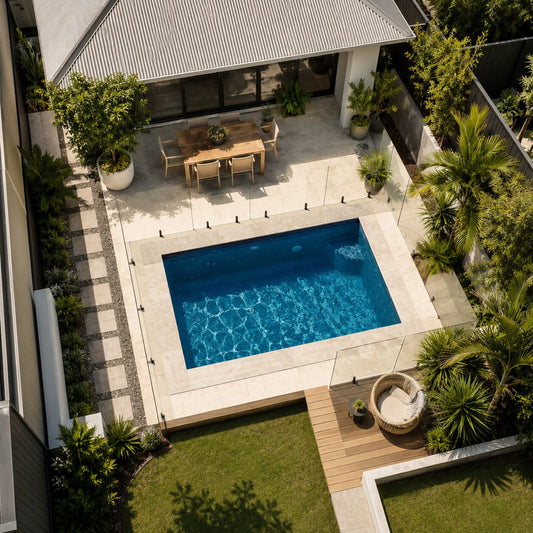
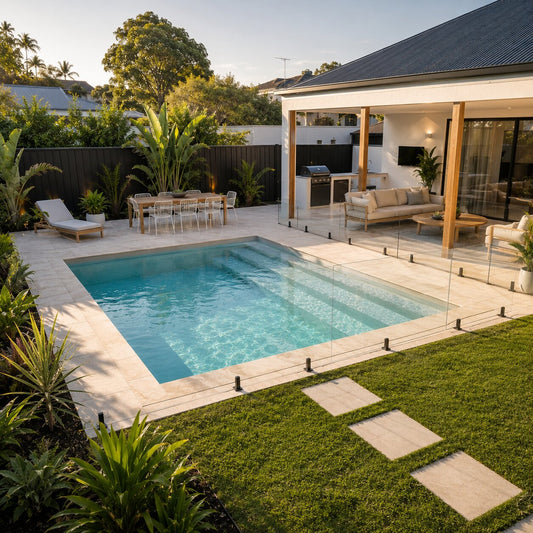
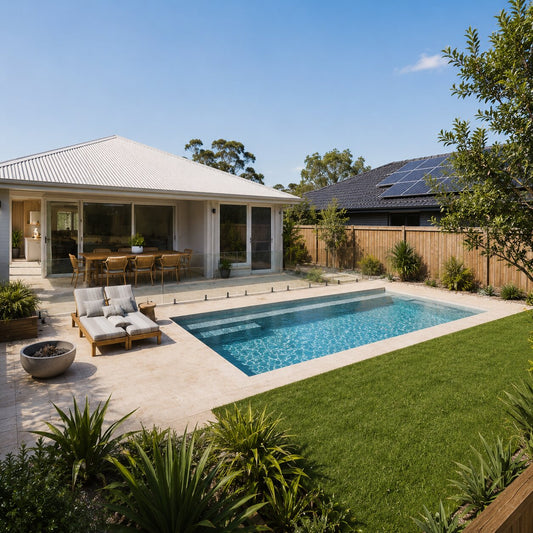
Glass fences — the rules are the same
Frameless glass fences are popular because they look better, but they have to meet exactly the same standard. The glass must be tempered safety glass, the gaps between panels must be under 100mm, and the gate hardware must meet the same self-close/self-latch requirements.
The non-climbable zone applies regardless of fence material.
Existing fences as part of the barrier
You can sometimes use an existing boundary fence as one side of the pool barrier — the timber paling fence between you and the neighbour, for example. But the existing fence has to meet the standard too. That means:
- 1.8m minimum from the inside (the pool side) — not 1.2m
- No horizontal rails that could be climbed
- Compliant on the pool side, including the non-climbable zone
If your existing fence has horizontal rails on the pool side, that's a problem. You'll need to address it before compliance.
Doors and windows that open onto the pool
A door or window from the house into the pool area is allowed but tightly regulated. Doors must self-close and self-latch like a pool gate. Windows must be limited to a 100mm opening with a permanent restrictor.
For most builds, we run the pool barrier around the pool zone and exclude the house entirely — simpler and cheaper.
The Pool Safety Certificate
Once your pool is built and your fence is installed, a licensed pool safety inspector visits and issues the Pool Safety Certificate. This is a legal requirement to fill the pool with water.
The certificate is valid for two years, then needs renewing. If you sell the house with a pool, the buyer's certifier will check it again.
What we include in our builds
Every Wahoo build includes:
- Pool fence design that complies with QDC MP 3.4
- Installation of the fence (your choice of frameless glass or aluminium)
- The pool safety inspection
- The Pool Safety Certificate
You don't have to coordinate any of this. We do.
What can stop a certificate being issued
The most common issues:
- Climbable items in the 900mm zone (BBQ, planter)
- Boundary fence with climbable horizontal rails on pool side
- Aircon unit installed too close
- Gate not self-latching properly
We check for all of these before booking the inspector, so it almost never falls over for our clients. But if you're getting a pool elsewhere, ask the builder how they handle it.
If you're starting a pool conversation and want to know what's involved with fencing on your specific block, talk to us.
— Mike