Best Water Features for Pools
AdminA well-built pool already changes how a backyard feels, but the right water features for pools can take that space from simply functional to genuinely memorable. The difference is not just visual. A water feature can add movement, soften hard landscaping, create sound, define zones and make the whole outdoor area feel more considered.
For Brisbane homeowners, the best result usually comes from choosing a feature that suits the pool design, the block and the way the space will actually be used. A dramatic feature might look impressive in photos, but if it creates too much splash near an entertaining area or feels out of scale in a compact yard, it can quickly become the wrong choice. Good design is about balance.
Why water features for pools matter
Water features do more than decorate a pool. They shape the atmosphere of the space and often help tie the pool into the surrounding landscape, paving and outdoor living areas. On a contemporary build, a clean blade or sheer descent can reinforce sharp lines and architectural simplicity. On a more tropical or family-focused design, softer elements such as deck jets or a spillway can create movement without overpowering the backyard.
They can also improve how a pool is experienced day to day. The sound of moving water can help mask traffic or neighbourhood noise. A raised wall with a spillover can create a stronger visual focal point. In some layouts, a feature can even help separate a lounging zone from an active swimming area.
That said, more is not always better. Every feature adds complexity to the design, construction and ongoing maintenance of the pool. The right approach is to include features that have a purpose, not just fill space.
Popular water features for pools
The most suitable option depends on the style of pool, the available space and the level of visual impact you want.
Sheer descents and water blades
These are among the most popular choices for modern pools. Water falls in a clean, controlled sheet from a wall, often finished in tile, stone or render. The effect is crisp and architectural, which suits contemporary homes and formal outdoor spaces.
A sheer descent works best when the surrounding finishes are equally polished. If the pool design is minimalist, this type of feature can look refined and high-end. It is less suited to informal gardens or heavily textured landscapes unless it is integrated carefully.
Spa spillways
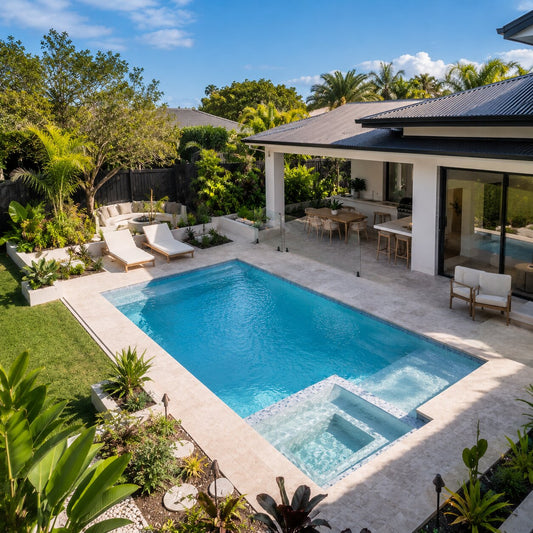
Where a raised spa sits beside or above the main pool, a spillway creates a natural transition between the two. This is one of the most practical water features for pools because it adds movement without introducing a separate design language. It feels like part of the pool rather than an add-on.
For homeowners planning a full outdoor upgrade, this can be an efficient choice. The spa becomes both a functional addition and a design feature, particularly when paired with lighting and quality tiling.
Deck jets and laminar jets
Jets send arcs of water from the pool surround into the water. Deck jets are lively and family-friendly, while laminar jets create a more precise, glass-like stream that suits contemporary designs.
These features are often a good match for entertaining areas because they add energy and visual interest without needing a large wall or raised structure. The trade-off is that wind can affect how cleanly the water lands, which matters in more exposed sites.
Water walls and raised feature walls
A water wall combines vertical structure with flowing water, often becoming a centrepiece within the landscape. This can be especially effective on sloping blocks, where retaining and level changes are already part of the design solution.
Instead of treating structural walls as something to hide, they can be turned into a feature that contributes to the overall finish of the backyard. Done properly, this approach feels integrated rather than decorative for decoration's sake.
Scuppers and rain curtains
These features introduce a more distinctive look. Scuppers release water through outlets in a wall, while rain curtains create a fine sheet of water from above. They can produce a striking effect, but they need careful planning.
In family backyards, they are usually best used in moderation. If overdone, they can create too much noise or splash. In the right setting, however, they can make a pool feel more like a private resort.
Choosing water features for pools that suit your home
The starting point should always be the pool and the block. A narrow lap pool in an inner-suburban backyard needs a different design response from a large luxury pool on acreage or a custom build on a steep site.
Scale matters. A compact plunge pool may only need a slim water blade or subtle spillway to create interest. A larger pool with broad paving areas and a pavilion can carry a more substantial wall feature or a combination of elements. When the feature is proportionate, the whole space feels more cohesive.
Material selection also matters. Water highlights every finish around it, so the feature should work with the pool coping, tiles, pavers and garden palette. Stone can feel warm and natural, while large-format tiles and rendered surfaces lean more contemporary. The key is consistency.
It is also worth thinking about how the space will sound. Some owners want a gentle background effect that makes the backyard feel calmer. Others prefer a stronger, more resort-style statement. There is no single right answer, but there is a right answer for the way you live.
Design considerations homeowners often miss
One of the most common mistakes is treating a water feature as the final extra rather than planning for it from the beginning. The best results come when the feature is considered at design stage alongside engineering, hydraulics, lighting and landscaping.
This is particularly important on Brisbane's sloping blocks. Level changes, retaining requirements and structural loads can all affect what is possible and what will perform well long term. A feature wall might look straightforward on paper, but it needs proper support, drainage and integration with the pool shell and surrounding works.
Access and maintenance are often overlooked too. Pumps, pipework and filtration components need to be accessible. If a feature is hard to clean or difficult to service, it can become frustrating over time. Good design should not only look impressive on handover day. It should still be practical years later.
Lighting is another detail that can change the result completely. A simple water blade can look understated during the day and become a standout feature at night with the right lighting treatment. If the pool is part of a larger entertaining area, this matters.
Budget, upkeep and the value question
Water features can add real value to a backyard project, but value does not always mean choosing the biggest or most elaborate option. It means investing where the feature improves the overall experience of the space.
Costs vary depending on structure, finishes, hydraulics and the complexity of the installation. A spillway integrated into a raised spa may be more cost-effective than a separate feature wall with its own detailing and services. On the other hand, if a retaining wall is already required, turning that structure into a water feature may make strong design and budget sense.
Ongoing upkeep should be part of the decision as well. Moving water can increase evaporation and splash, and some features need regular cleaning to stay looking their best. This does not mean avoiding them. It simply means making an informed choice based on your expectations.
Getting the best result from a complete design approach
The strongest pool projects are rarely designed in isolated parts. When the pool, landscaping, paving, drainage, fencing, lighting and water features are planned together, the finished backyard feels intentional and easier to build.
That is where working with one experienced team can make a real difference. Instead of trying to coordinate separate trades and hoping every detail lines up, homeowners can move through design and construction with a clearer plan and fewer surprises. For custom builds, especially on challenging sites, that joined-up approach usually leads to a better result.
If you are considering water features for pools, start by asking what role the feature should play in your backyard. It might be a focal point, a sound buffer, a link to a raised spa or a way to make a sloping site feel resolved. When the answer is clear, the design decisions tend to follow naturally - and the final space feels like it was always meant to be there.