How to Design a Plunge Pool That Works
AdminA plunge pool can be the difference between a backyard that feels cramped and one that feels considered. When space is tight, or you want the benefits of a pool without giving over the whole yard, the real question is not whether it will fit. It is how to design a plunge pool so it suits your block, your home and the way your family actually lives.
In Brisbane and across South East Queensland, plunge pools are a popular choice for smaller suburban blocks, narrow side setbacks and homes where outdoor entertaining matters just as much as swimming. They also suit homeowners who want a strong visual feature, lower water volume and less maintenance than a larger pool. But getting the design right takes more than choosing a small rectangle and picking a tile.
How to design a plunge pool starts with the block
The most successful plunge pool designs begin with the site, not the shape. A pool that looks good on paper can feel awkward once it is built if the levels, access and surrounding space have not been properly considered.
Start by looking at how the backyard is used now and how you want it to work in future. If the kids need lawn space, if you entertain often, or if you want a quieter retreat near the master suite, those priorities will shape the pool location. On a flat block, placement is usually more flexible. On a sloping block, the pool may need to become part of a larger engineered solution with retaining, drainage and level changes built into the design from the beginning.
Orientation matters as well. In Brisbane’s climate, sunlight can make a major difference to comfort and water temperature. A plunge pool positioned to capture the sun is often more inviting through more of the year, while too much exposure without shade nearby can make the surrounding paving harsh underfoot in summer. Privacy should also be weighed early, especially on compact blocks with close neighbours.
Size is not just about fitting it in
One of the most common mistakes is shrinking the pool without thinking about how it will feel to use. A plunge pool is compact by design, but it still needs to support its purpose. For some households, that means a place to cool off and relax. For others, it might include hydrotherapy seating, a water feature, or enough room for young children to play under supervision.
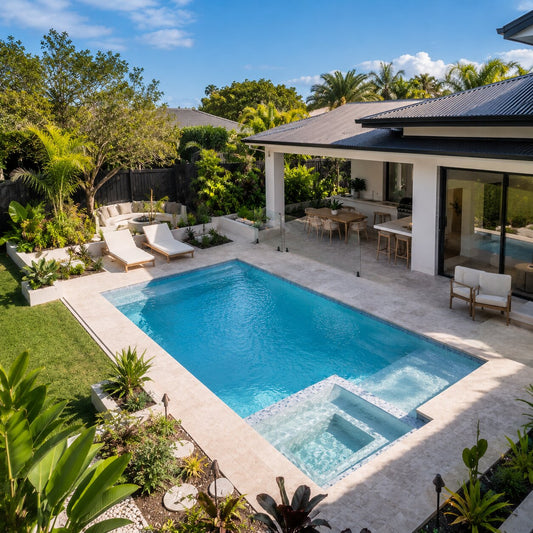
Depth is part of that decision. A deeper plunge pool can create a more luxurious, immersive feel, but it may not be as practical for casual lounging or family use. Bench seating can make a smaller pool far more functional, particularly if the pool is intended as a social space rather than somewhere for active swimming. Entry steps also need to be designed carefully so they do not consume too much of the usable area.
There is always a trade-off. A smaller shell may reduce the build footprint and help with budget, but if it leaves little room around the edge for movement, furniture or planting, the whole outdoor area can feel squeezed. Good plunge pool design considers the space around the water just as much as the water itself.
Shape should match the home and the outdoor area
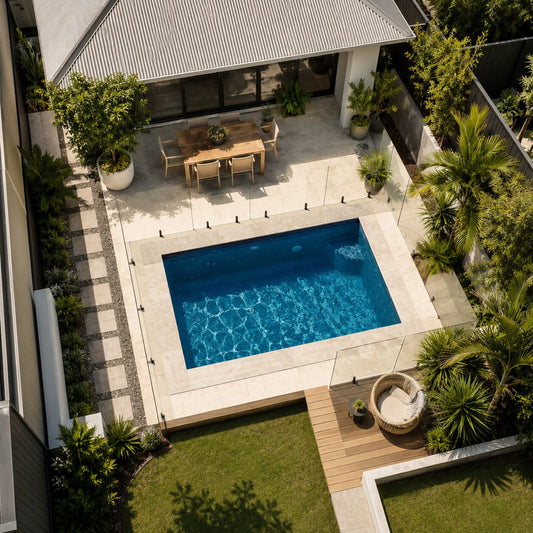
A plunge pool should feel like it belongs to the house. Contemporary homes often suit clean lines, square forms and simple detailing. Traditional or character homes may benefit from softer edges, warmer finishes or a design that sits more naturally within a landscaped garden setting.
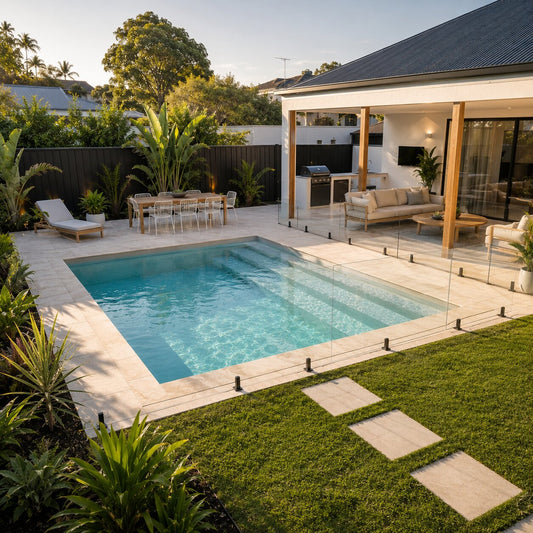
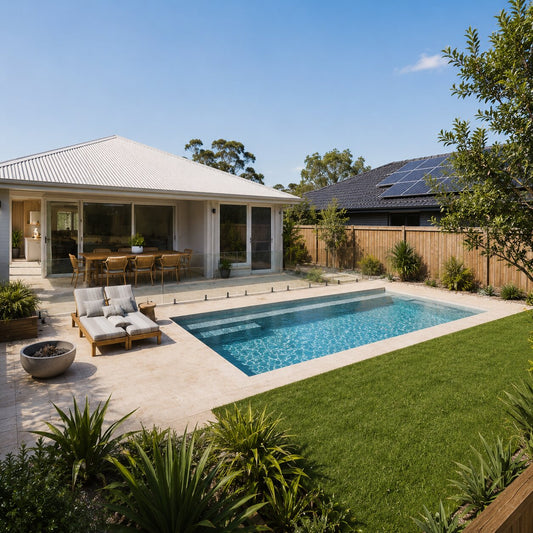
This does not mean every plunge pool needs to be highly decorative. In many cases, the strongest result is a restrained design with quality finishes and well-planned proportions. The pool should connect visually with the home’s architecture, paving materials and outdoor living spaces so the entire backyard reads as one project, not a series of disconnected additions.
If the pool is close to an alfresco or pavilion, think about sightlines from inside the home as well. A plunge pool often becomes a focal point from the kitchen, living room or entertaining area. Its shape, tile line, coping and water level all contribute to that view.
The surrounding space matters as much as the pool
When homeowners ask how to design a plunge pool, they are often focused on the shell itself. In practice, the success of the finished result usually comes down to what happens around it.
Paving needs to be practical, safe and suited to the style of the home. Drainage must be resolved properly, especially on sloping sites or where hard surfaces direct water towards the house. Pool fencing should meet compliance requirements without dominating the space visually. Lighting can completely change how usable the area feels at night, and planting softens the hard edges while adding privacy.
This is where a complete outdoor approach makes a real difference. If the pool is designed separately from the landscaping, retaining walls, drainage and entertaining areas, you can end up with compromises that are expensive to correct later. A plunge pool may be small, but it still sits inside a broader construction and design picture.
Budget decisions should be made early
A plunge pool is often seen as the more affordable option, and in many cases that is true. But cost is influenced by far more than size alone. Excavation conditions, access constraints, engineering requirements, interior finishes, heating, water features and surrounding landscape works all affect the overall investment.
That is why it pays to set priorities early. If your main goal is a clean, attractive cooling pool with quality paving and fencing, the budget can be directed there. If you want the pool to be part of a high-end outdoor entertaining zone with feature tiling, built-in seating, lighting and a nearby outdoor kitchen, those elements should be planned as part of one scope.
Trying to add important features later often costs more and can disrupt the balance of the design. A clear plan from the start usually delivers a better result and a smoother build experience.
How to design a plunge pool for long-term use
Good pool design is never just about the first summer. It should also suit the family’s needs over the next five, ten or fifteen years.
Think about who will use the pool and how that may change. Younger children may need easy entry and shallow resting areas. Teenagers might value a pool that connects to a larger entertaining zone. Older homeowners may prefer a lower-maintenance design with comfortable seating, heating and easy access from the house.
Maintenance should be considered in the early design stage too. Simpler shapes are often easier to clean. Material choices affect how the pool ages and how much care the surrounding area will need. Equipment location matters as well, particularly on smaller blocks where plant noise and access can become an issue if they are poorly planned.
A well-designed plunge pool should not only look right on completion day. It should continue to feel practical, comfortable and easy to own.
Site challenges do not have to rule it out
Many Brisbane homeowners assume a plunge pool will be simple because it is compact. In reality, smaller pools can still involve complex construction, particularly on difficult sites. Narrow access, tight boundaries, reactive soil and sloping land all need experienced planning.
That is why engineering oversight and coordinated project delivery matter. On a sloping block, for example, the plunge pool may need to integrate with retaining walls, stairs, drainage and levelled entertaining areas. If those works are treated as separate jobs, delays and design conflicts are more likely.
Handled properly, though, challenging sites can produce some of the most striking results. A plunge pool built into a level change, framed by quality landscaping and tied neatly into the home can transform an otherwise difficult backyard into a highly usable outdoor area.
Keep the design focused
The best plunge pools are usually the ones that know what they are trying to be. A compact pool can be elegant, family-friendly, resort-style or highly architectural, but it should not try to do everything at once.
If your priority is relaxation, design for comfort with seating, shade and privacy. If the goal is to add value and improve the overall feel of the backyard, make sure the pool works with the landscaping, lighting and entertaining layout. If space is limited, resist the temptation to overfill the area with too many competing features.
At Wahoo Pool & Landscape Construction, that is often where the real value of design-led planning shows itself. When the pool, structural works and landscaping are considered together, the end result feels easier, more functional and far more complete.
A well-designed plunge pool should make your backyard feel bigger, better connected and more enjoyable to use. Start with the way you want to live outdoors, and the right design decisions tend to follow.