Pool Fencing Versus Frameless Glass Compared
AdminA pool fence is one of the first things your family will see when they step outside and one of the last details worth treating as an afterthought. When considering pool fencing versus frameless glass, Brisbane homeowners are usually weighing more than looks. They are deciding how open the backyard feels, how the pool zone functions with children, where the budget is best spent and how the fence will sit alongside paving, gardens and entertaining areas.
Frameless glass can make a pool feel larger and preserve a valuable view. Other fencing styles can provide privacy, stronger visual definition or a more cost-conscious finish. The right answer depends on the pool design, your block and the way your household lives outdoors.
Pool fencing versus frameless glass: the key difference
The comparison can be slightly misleading because frameless glass is itself a type of pool fencing. In practice, homeowners are often comparing frameless glass with semi-frameless glass, aluminium fencing, timber-look aluminium or solid boundary-style screening used around parts of the pool area.
Every option must be designed and installed to meet the applicable Queensland pool safety requirements. That means the decision cannot be based on appearance alone. Fence height, gates, latches, non-climbable zones, clearances and the surrounding landscape all need careful consideration. A beautiful fence that does not account for nearby furniture, retaining walls or garden features can create unnecessary compliance issues and costly changes later.
For this reason, fencing works best when it is planned with the pool, paving and landscaping rather than selected after construction is complete.
Why frameless glass remains a popular Brisbane choice
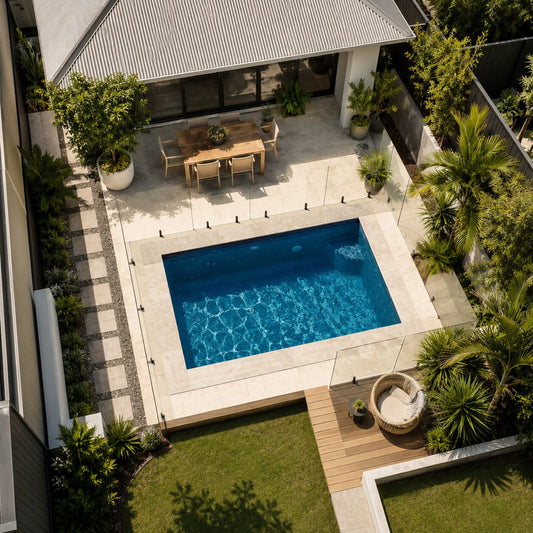
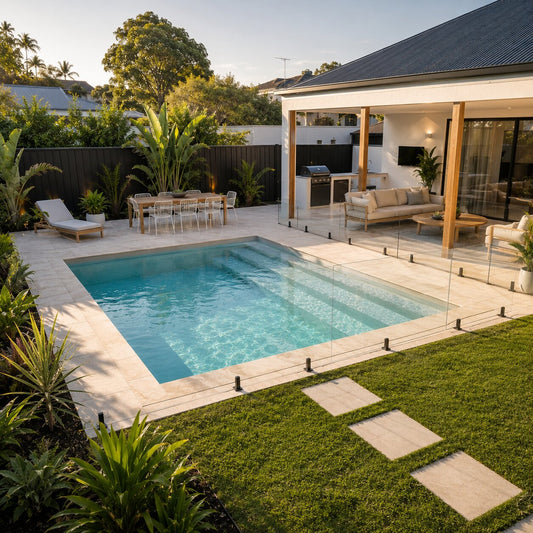
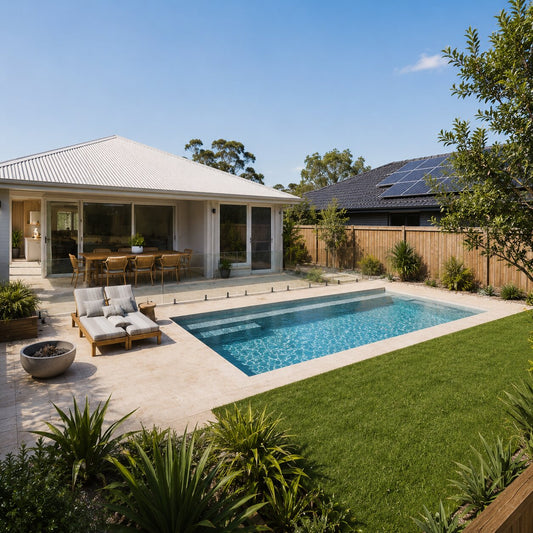
Frameless glass fencing uses toughened glass panels held in place by discreet spigots or channels. With minimal visible hardware, it creates a clean barrier without interrupting sightlines across the yard.
For homes with a compact backyard, a wet-edge pool, a water feature or a strong outlook, this visual openness can be a major advantage. You can keep an eye on children in the pool from the patio, outdoor kitchen or living room while maintaining a more connected feel between the pool zone and the rest of the garden.
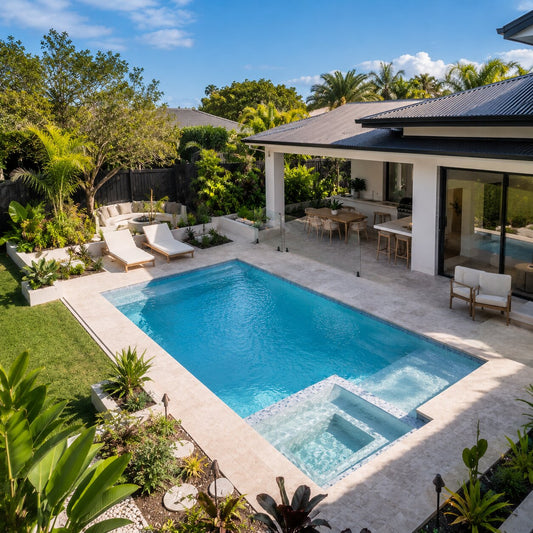
Frameless glass also suits contemporary and luxury pool designs particularly well. It lets statement features do the talking: natural stone coping, large-format paving, tiled pool interiors, feature planting or a carefully designed waterline. On sloping blocks, glass can be useful where the pool has been positioned to take advantage of a view, as it avoids turning that outlook into a wall of vertical bars.
The trade-off is that frameless glass is generally a higher-investment option. Glass panels, quality hardware, precise installation and the preparation needed for suitable footings or paving all affect the final cost. It also requires regular cleaning. Rain, pool splash, dust and fingerprints are more noticeable on clear glass, especially around a busy family pool.
That does not mean glass is high maintenance in a difficult sense. A regular wash and occasional attention to hardware will keep it looking good. But homeowners who want the fence to disappear visually need to be comfortable with keeping it clean enough to do so.
When semi-frameless glass may be the better fit
Semi-frameless glass retains the transparent panels but uses visible posts between them. It still offers clear views and a modern finish, often at a more accessible price point than fully frameless glass.
For many Brisbane families, it is the sensible middle ground. The posts provide a little more structure visually, while the glass maintains a light, open feeling around the water. It can be an especially practical choice where long fence runs, changes in level or a more defined boundary are part of the design.
The case for aluminium and screened pool fencing
Aluminium pool fencing remains popular for good reason. It is durable, cost-effective, available in a range of colours and well suited to many traditional, contemporary and family-focused backyards. Black aluminium fencing is a familiar choice because it can recede into the landscape, particularly when framed by planting.
Unlike clear glass, aluminium bars do create a visible line between the pool area and the rest of the yard. In some designs, that is a benefit. A defined pool enclosure can help create order around a large outdoor space, separate a play lawn from the pool zone or make the pool feel like a distinct destination within the garden.
Aluminium can also be a better privacy choice than glass when combined with compliant screening or carefully positioned landscaping outside the required non-climbable areas. This can matter on tighter suburban blocks where neighbours look directly towards the pool and entertaining space.
Timber-look aluminium, powder-coated screens and solid architectural elements can introduce warmth and character, but they must be detailed carefully. The more solid the fence treatment, the more it changes airflow, light and sightlines. It can also make a smaller yard feel enclosed if used everywhere. Often, the best result is a considered combination: a transparent section where the view matters most, with screening where privacy or service areas need attention.
Views, privacy and family supervision
Your ideal fence should support the way you use the backyard on an ordinary Saturday afternoon, not just how it looks in photographs.
If adults regularly sit under a pavilion while children swim, clear glass provides excellent passive visibility. If the pool sits beside the main living area, transparent fencing can help the whole outdoor space feel connected without compromising the separation a compliant enclosure provides.
Privacy can shift the decision in another direction. A glass fence does not block neighbouring windows, and its reflective surface can sometimes make views more noticeable at certain times of day. Landscaping may soften this, but plants need room to grow and must be kept from creating climbable access near the fence. On a narrow block, an aluminium or screened solution along a boundary may be more practical, with glass reserved for the pool-facing entertaining area.
For families with young children, gate location is just as important as panel choice. A well-positioned self-closing, self-latching gate should suit the natural path from the home to the pool while avoiding awkward pinch points near lounges, dining settings and barbecue areas. This is where a complete backyard plan makes a real difference.
Cost is more than the price per metre
It is tempting to compare fencing options by their installed metre rate, but that rarely gives the full picture. The final cost is influenced by the fence length, number of gates, ground conditions, level changes, required footing work, panel sizes, hardware finish and how the fence interfaces with paving, retaining and existing structures.
Frameless glass often costs more upfront, particularly where custom panels or specialised fixing methods are needed. Yet it may add strongly to the perceived quality of a premium pool and landscape project. It can be a worthwhile choice when the pool is a central architectural feature and the visual return matters every day.
Aluminium fencing generally gives homeowners greater flexibility when working to a defined project budget. Investing the difference in better paving, drainage, lighting, planting or a larger entertaining zone can sometimes deliver a more balanced outdoor result than stretching the budget for glass across every boundary.
The most useful question is not, “Which fence is cheapest?” It is, “Which combination of finishes will give this backyard the best long-term function and value?”
Plan fencing with the whole landscape
Pool fencing needs to work around more than water. It must account for steps, deck levels, garden beds, retaining walls, pool equipment, outdoor furniture and access routes for construction and future maintenance. On Brisbane’s sloping sites, changes in height can add another layer of design and engineering consideration.
Planning early gives you more options. Glass can be aligned with paving joints and coping lines for a refined finish. Aluminium can be colour-matched to window frames, pergolas or roof details. Planting can be positioned to provide softness without affecting safety clearances. Drainage can be resolved before hard surfaces and fence footings are locked in.
As a complete pool and landscape builder, Wahoo Pool & Landscape Construction can coordinate these decisions across the broader backyard project, reducing the risk of separate trades working to competing plans.
Choosing the right option for your backyard
Choose frameless glass when unobstructed views, a contemporary finish and easy pool visibility are your highest priorities, and you are happy to allow for the added investment and cleaning. Consider semi-frameless glass when you want a similar open effect with a little more budget flexibility.
Aluminium fencing is often the practical choice for larger enclosures, privacy-focused areas and family backyards where durability and value lead the brief. A mixed-material approach can be the strongest solution of all, using glass where it earns its place and aluminium or screening where privacy, boundaries or budget call for it.
Before settling on a fence, stand in the key places you will use the yard: at the kitchen window, beneath the future entertaining area, near the children’s play space and along the boundary. The best pool fence is the one that protects your family, suits the site and makes every part of the finished backyard feel considered.