Pool Landscaping for Families That Works Hard
AdminA family pool is rarely used as a quiet design feature. It becomes the place for cannonballs after school, weekend barbecues, wet towels, birthday parties and a few adults trying to enjoy a peaceful coffee between it all. The best pool landscaping for families plans for that reality from the start, creating a backyard that is safe, comfortable, easy to maintain and still worth looking at from inside the house.
For Brisbane and South East Queensland homes, the conversation also needs to account for heat, heavy rain, sloping sites and the way outdoor areas are used for much of the year. A well-designed pool zone should not force families to choose between a beautiful finish and a functional one. With the right layout, materials and planting, it can deliver both.
Start with how your family will use the pool
Before selecting tiles, plants or a pavilion style, map out what happens around the pool on an ordinary Saturday. Where do children enter the yard? Where will bags, goggles and towels land? Do you need room for younger children to play away from deeper water, or a clear area for teenagers to gather with friends? These practical questions shape a better outcome than choosing features in isolation.
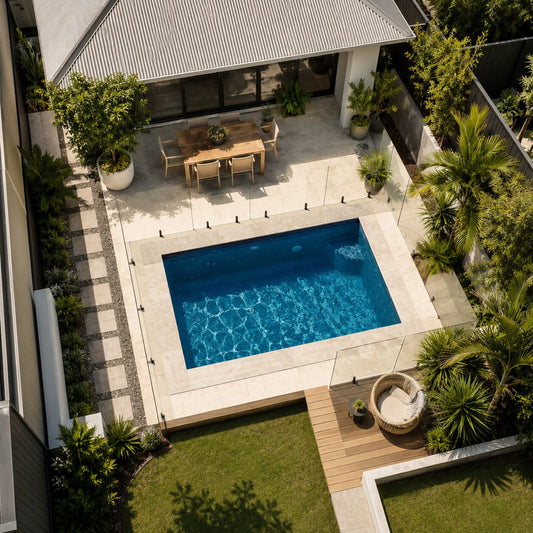
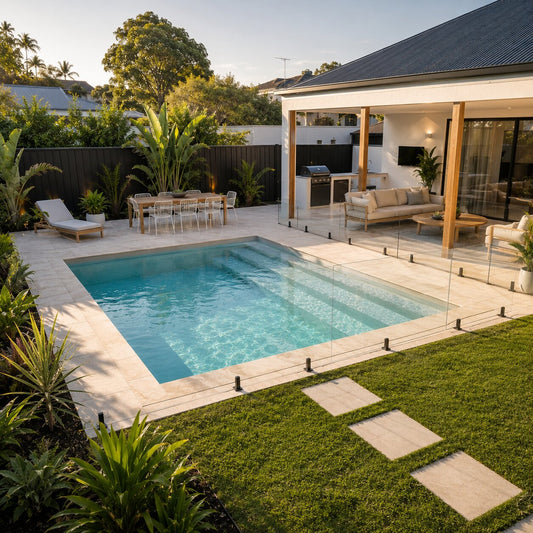
A family-friendly layout often benefits from clear zones. The swimming area needs enough circulation space for supervision and movement. A shaded seating area gives adults a comfortable place to watch children without sitting in full sun. A dining or barbecue zone works best when it is close enough to the pool to feel connected, but not so close that wet traffic constantly crosses through food preparation areas.
Sightlines matter as much as square metres. If you can see the pool from the kitchen, living room or primary outdoor seating area, everyday supervision becomes easier. On compact blocks, this may mean using built-in benches, raised garden beds or a slimline planting palette rather than large structures that block views.
Allow for changing needs
Families do not stay at one life stage. A shallow ledge that suits toddlers can later become a place to sit and chat. An open lawn area may begin as a play space, then become valuable room for loungers, a fire pit or entertaining. Designing with a little flexibility avoids a backyard that feels dated as soon as children grow.
This does not mean every element must be oversized. It means choosing adaptable features. Generous paving around one side of the pool, for example, can serve as a pram-friendly route, party space and future lounge area. A pavilion can provide weather protection now and add value as an entertaining area for years to come.
Build safety into the landscape, not around it
Pool safety begins with compliant fencing and gates, but landscaping has a major role in keeping the zone practical and easy to supervise. Current Queensland pool safety requirements must be considered during design and construction, including fence height, gate operation and non-climbable zones. A beautiful garden is no help if it creates a compliance issue or gives children easy access to the barrier.
Avoid placing climbable objects, dense shrubs, outdoor furniture or planter boxes too close to pool fencing. Select plants that will not quickly grow into the non-climbable area, and allow access for future fence inspections and maintenance. A skilled pool and landscape team can coordinate these details so they are addressed before construction, rather than becoming an expensive adjustment later.
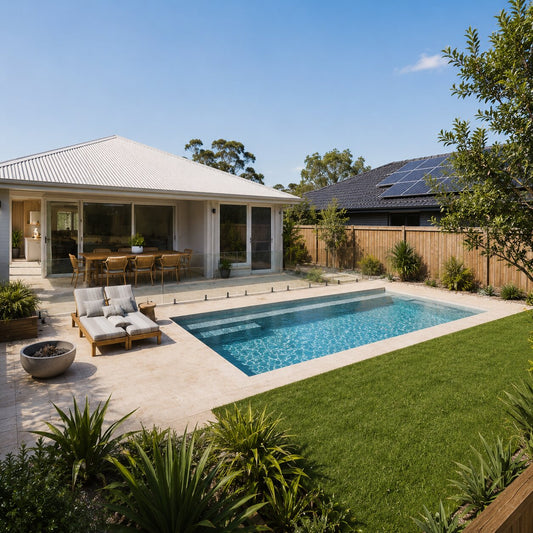
Underfoot surfaces deserve equal attention. Pool surrounds should offer reliable slip resistance when wet, stay manageable under bare feet and suit the architecture of the home. Some materials look exceptional but become very hot in Brisbane summers. Others require more sealing or cleaning than a busy household wants to take on. The right choice depends on sun exposure, budget, the surrounding finishes and how much time the family genuinely wants to spend on upkeep.
Good drainage is another quiet safety feature. Water should move away from the house and not sit across walkways after a storm or an energetic afternoon in the pool. On sloping blocks, drainage design, retaining and surface levels must be resolved together. Treating them as separate jobs can lead to puddling, erosion or awkward transitions between the pool deck and garden.
Make shade part of the original design
Brisbane families need usable shade, not just a single umbrella that moves with the afternoon sun. A covered patio, pavilion, pergola or strategically positioned shade structure can make the pool area more comfortable across the day and extend its use through light rain.
The best option depends on the block and lifestyle. A pavilion can create a genuine outdoor room with lighting, ceiling fans, a kitchen and dining space. A pergola may provide a lighter visual presence and work well where the backyard needs to stay open. Mature trees can add welcome shade and soften hard surfaces, but their placement needs care. Trees that drop large amounts of leaf litter into the pool or have invasive root systems can create ongoing maintenance problems.
Think about the sun at different times of year, not only during a site visit. Morning shade may be welcome near an outdoor breakfast setting, while late-afternoon protection can make the difference between a deck that gets used and one that is avoided in summer. Rooflines, neighbouring homes and retaining walls all influence where shade will fall.
Choose planting that looks good without demanding weekends
Lush planting makes a pool feel settled and private, but a family garden must be resilient. It needs to cope with splashing, reflected heat, occasional footballs and periods when attention is directed elsewhere. The aim is not a high-maintenance display garden. It is layered, healthy planting that frames the pool and improves privacy without taking over the space.
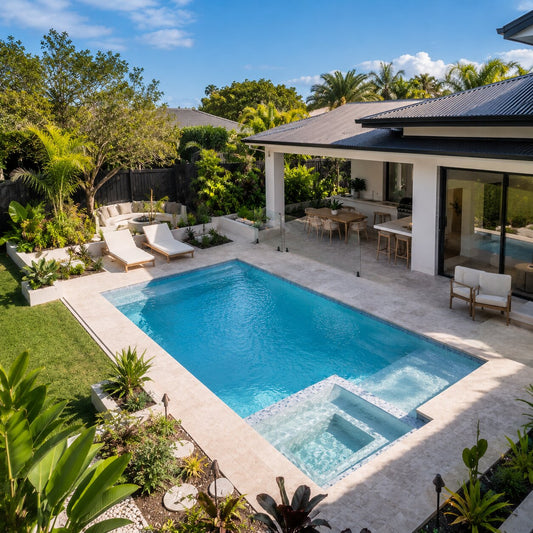
For many Brisbane backyards, a combination of evergreen screening, lower structural plants and softer feature planting gives the best balance. Screening plants can soften boundary fences and create a sense of enclosure. Lower planting around paths and seating areas preserves sightlines. Feature plants add colour, texture and a more considered finish near entries or focal points.
Plant selection should also take account of the pool environment. Avoid species with excessive leaf drop, sharp foliage near circulation paths, messy fruit or thorns where children will be playing. Planting beds should be wide enough to retain mulch and soil during rain, while irrigation can reduce the pressure of keeping gardens alive through dry spells.
There is a trade-off between instant impact and long-term performance. Large advanced plants offer privacy sooner but cost more and may need extra establishment care. Smaller plants are more affordable, yet require patience. A considered landscape design can use a mix of both, putting mature planting where privacy is urgent and allowing other garden areas to grow over time.
Plan storage and transitions that reduce the mess
The most successful family pool areas make everyday clutter easier to manage. A designated spot for towels, pool toys, cleaning equipment and outdoor cushions keeps the deck safer and more inviting. This might be a weatherproof storage bench, discreet cabinetry within a pavilion or a screened service area located away from entertaining spaces.
Transitions also matter. A practical route from the house to the pool reduces wet feet through internal living areas. An outdoor shower or simple rinse point can help manage chlorine, grass and mud before children head inside. If the yard includes lawn, create durable access paths rather than expecting one patch of grass to handle constant traffic.
Lighting should support the way the space is used after sunset. Step lights, path lighting and gentle illumination around seating areas improve safety without turning the backyard into a floodlit stadium. Pool lighting adds atmosphere, but it should be part of a wider lighting plan that makes gates, level changes and pathways easy to see.
Coordinate the whole backyard from the beginning
A pool can be built first and landscaped later, but this approach often creates compromises. Access gets restricted, levels have to be reworked, or the finished pool surround feels disconnected from the rest of the yard. Coordinating the pool, fencing, paving, drainage, retaining walls, planting and outdoor living areas as one project gives every element a clear purpose.
This is especially valuable on Brisbane’s sloping blocks, where engineering, retaining and drainage can have a direct impact on pool placement and usable garden space. Addressing site conditions early helps protect the budget and avoids surprises once excavation begins.
Wahoo Pool & Landscape Construction brings pool construction and landscape works together so homeowners can work with one experienced team through the design and build process. That coordination helps turn a collection of good ideas into a backyard that functions properly from day one.
The right family pool landscape should make life outside feel easier, not add another list of jobs. When the practical details are resolved early, the result is a space where children can play freely, adults can relax nearby and the whole family has more reason to spend time together.