Best Plants Around Pools for Brisbane Backyards
AdminA pool can look beautifully finished on handover day, then feel bare, exposed and overly hard once the Queensland sun hits the paving. The best plants around pools do more than soften those edges. They create privacy, bring shade and texture to the space, and make the pool feel like a considered part of the backyard rather than a separate feature.
For Brisbane homeowners, choosing the right planting is about more than appearance. Plants need to cope with heat, humidity, reflected glare, occasional splash, heavy summer rain and the practical demands of pool maintenance. The right selections also protect your investment by keeping leaves, fruit and invasive roots away from the water, paving and equipment.
What Makes the Best Plants Around Pools?
A good poolside plant earns its place all year. It should suit the available sun, tolerate Brisbane conditions and look tidy without constant pruning. Just as importantly, it should be positioned to keep pool cleaning simple and preserve clear access around the pool.
Low-litter planting is usually the priority. A plant may look spectacular in a nursery, but falling flowers, pods, berries and large leaves soon end up in skimmer baskets, filters and on the pool floor. That means more cleaning, greater strain on equipment and less time enjoying the water.
Root behaviour matters too. Large, aggressive root systems can lift paving, affect retaining structures or seek out moisture near plumbing. This does not mean every pool garden needs to be sparse. It means plant size and location should be planned together, with enough room for mature growth.
Pool water type can influence the decision as well. Saltwater pools release salt spray close to the coping, while chlorinated water can affect sensitive foliage where regular splashing occurs. No plant is completely maintenance-free, but tough, climate-suited varieties generally recover better and require less attention.
Poolside Plants That Work Well in Brisbane
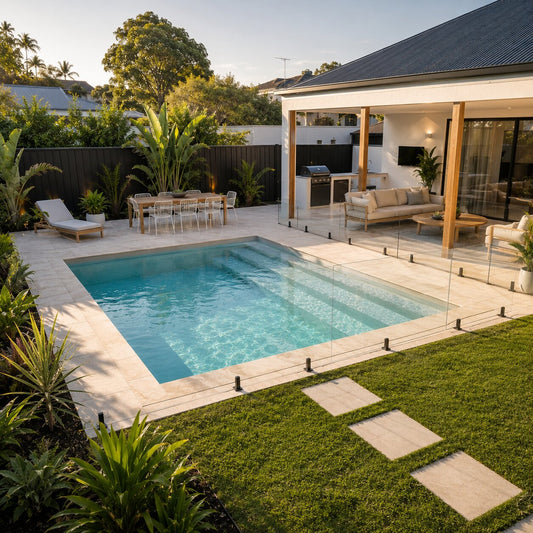
The most successful schemes combine a few plant types rather than relying on one row of the same shrub. A layered mix of screening, architectural foliage and softer ground-level planting creates depth without making the area crowded.
Clumping palms for a relaxed, tropical feel
Palms are a natural fit for many Brisbane pool areas because they offer height and movement while keeping a relatively narrow footprint. Golden cane palms can create an effective screen in larger spaces, provided they have room to mature and are maintained to remove old fronds. For a more refined look, lady palms suit protected courtyards and partly shaded pool zones, while kentia palms can work in sheltered locations.
The trade-off is debris. Every palm drops some fronds, and certain varieties produce substantial seed or fruit. Choose a species for its mature size and litter habits, not simply its appearance when young. Avoid planting palms directly over the water or where fallen material will blow straight into the pool.
Lush foliage plants for colour and contrast
Bird of paradise, cordylines, gingers and heliconias bring the bold leaves that make a pool garden feel established quickly. They work particularly well against contemporary tile, rendered walls and timber-look finishes, where greenery can reduce glare and add warmth.
These plants perform best where irrigation, drainage and access for trimming have been considered. Heliconias and gingers provide a vibrant tropical look, but may need more regular grooming than hardy structural plants. Cordylines are often a practical choice for tighter beds, with upright foliage that does not sprawl across paths.
Use these varieties a little back from the coping line. Their leaves can be damaged by regular splash, and larger clumps need space so they do not obstruct circulation around the pool.
Hardy strappy plants for clean edges
For a neat, low-maintenance finish, lomandra, dianella and dwarf mondo grass are dependable choices. Their compact forms suit narrow garden beds between paving and fences, along retaining walls or around seating areas. They also bring a softer edge to hardscape without dropping a heavy load of foliage into the pool.
Lomandra is especially useful on exposed Brisbane sites because it handles heat, dry periods and changing conditions well once established. Dianella adds blue-green foliage and, depending on the variety, delicate flowers, although any fruiting varieties should be selected carefully near the water. These plants are not designed to be a tall privacy screen, but they are excellent supporting layers beneath taller shrubs or palms.
Screening plants for privacy without bulk
Privacy is often one of the main reasons homeowners plant around a new pool. Lilly pilly varieties can provide a dense green screen and respond well to shaping, making them useful along boundary lines where space allows. Choose compact cultivars suited to the bed width, and allow for regular trimming to keep growth away from fencing and paths.
For a more formal garden, clipped hedges can frame a pool beautifully. They do require ongoing care, however, and a hedge planted too close to paving becomes difficult to maintain. In many backyards, a mixed screen of lilly pilly, palms and layered underplanting gives a more natural result while avoiding the flat look of a single-species hedge.
Clumping bamboo can also be used for fast vertical screening, but variety selection is critical. Only true clumping forms should be considered, and they still need a generously sized, well-contained garden bed. Running bamboo is not a suitable shortcut near pools, paving or neighbouring properties.
Plants to Keep Away From the Pool Edge
Some of Brisbane's most familiar garden plants can create expensive or frustrating poolside problems. Large ficus, weeping figs, mature gums and similarly vigorous trees have root systems and canopies that are simply too substantial for most pool settings. They can affect structures, shed heavily and create ongoing shade where sun is wanted.
Plants with messy fruit, seed pods, fine needles or frequent flower drop are also worth avoiding close to the water. Jacarandas, poincianas and bottlebrushes may be beautiful elsewhere in the garden, but their seasonal litter can turn pool care into a daily task.
Be cautious with spiky plants near active family areas. Agaves, yuccas and sharp ornamental grasses can look striking in a modern design, but they are less forgiving beside a busy pool where children walk barefoot and guests move between seating, water and outdoor dining. If used, position them well away from paths and play zones.
Plan Planting With Fencing, Drainage and Access in Mind
Pool planting should never be treated as an afterthought. The garden layout needs to work with fencing requirements, drainage falls, retaining walls, pool equipment and the way your family will use the space.
Plants must not compromise the required non-climbable zone around pool fencing. Dense shrubs, planter boxes, trees, outdoor furniture and garden features can all create a climbable point if placed incorrectly. This is an area where early planning helps prevent costly changes after construction, and current Queensland pool safety requirements should always be checked for your property.
Drainage is equally important on Brisbane's sloping blocks and during intense summer downpours. Garden beds should not direct soil, mulch or runoff towards the pool. Well-designed edging, drainage and irrigation help keep water where it belongs while supporting healthy plant growth.
Leave practical access to skimmer boxes, filters, pumps and heating equipment. A lush screen can hide equipment successfully, but it should not make routine servicing difficult. Select plants that can be trimmed from the garden side, rather than forcing a technician to push through dense foliage.
A Better Way to Build a Pool Garden
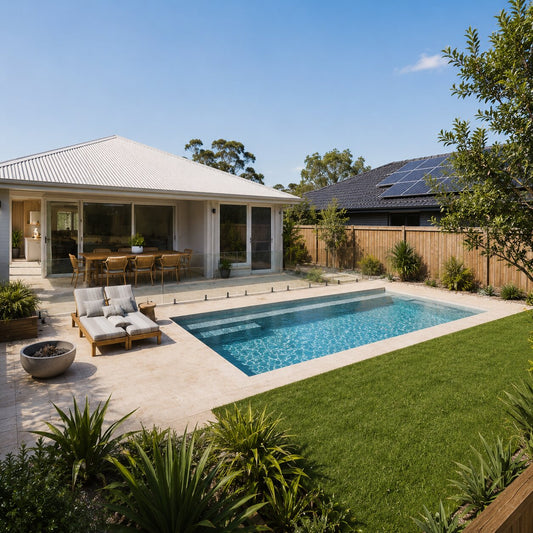
The most polished backyards are designed as one environment. Pool shape, paving colour, fencing, lighting, retaining, outdoor kitchen areas and planting should all support the same style and the same daily use.
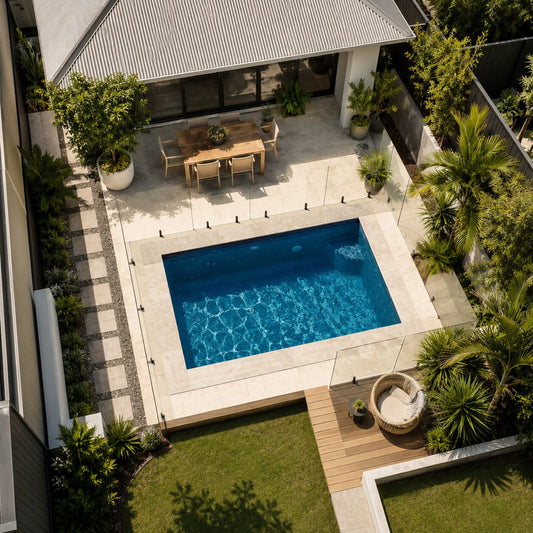
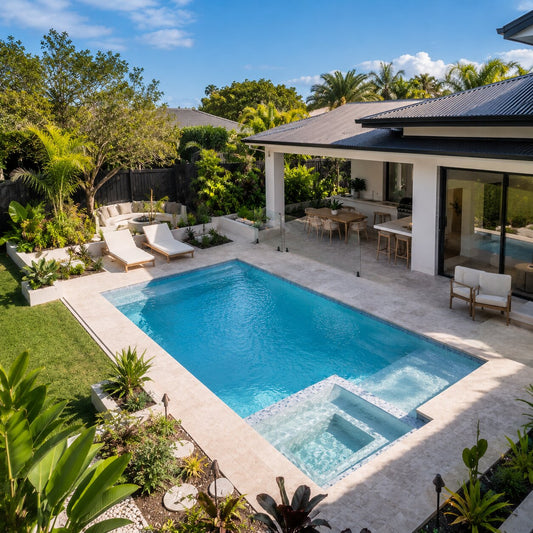
For example, a narrow lap pool may benefit from upright palms, clipped screening and simple strappy plants that preserve open sightlines. A larger family pool can carry more generous tropical planting, with shaded seating and softer garden zones set back from the water. On a sloping site, terraced planting can help integrate retaining walls and make the pool feel anchored to the block.
Wahoo Pool & Landscape Construction can coordinate pool construction and landscape works as one planned backyard transformation, so the planting is considered alongside the structural details rather than squeezed into leftover space.
Choose plants for the backyard you will be living in three, five and ten years from now. A garden that has room to mature, stays clear of the pool and remains easy to maintain will keep the view from the water just as inviting as the day the project is complete.