Decking vs Paving Around Pool
AdminStand next to a pool on a hot Brisbane afternoon and the surface under your feet matters straight away. When homeowners compare decking vs paving around pool areas, they are usually balancing three things at once - comfort, appearance and how much maintenance they want to live with long term.
There is no one-size-fits-all answer. The right choice depends on your block, your budget, the style of home, how the pool will be used and how much surrounding landscape needs to be tied in. Around many South East Queensland homes, both options can work beautifully, but they perform differently and create a different feel in the backyard.
Decking vs paving around pool - what changes most?
The biggest difference is not just the material itself. It is the overall experience of the space. Decking tends to create a softer, resort-style finish that feels warm and relaxed. Paving usually delivers a more solid, permanent and architectural result that can connect more easily with pathways, alfresco areas and broader landscaping.
That matters because a pool surround is never viewed in isolation. It needs to work with fencing, drainage, coping, nearby entertaining areas and the way people actually move through the yard. A material that looks perfect in a photo can become frustrating if it is slippery, hard to maintain or awkward on a sloping block.
Why decking appeals to many pool owners
Decking is often chosen for its look and feel. Timber and timber-look composite products can make a pool area feel more natural and inviting, especially in family backyards where the goal is to create a relaxed outdoor living zone rather than a strictly formal finish.
Underfoot comfort is one of decking's strongest advantages. In many cases, decking can feel cooler than darker hardscape surfaces, which is worth considering in Brisbane's heat. It can also provide a slightly gentler feel for bare feet and for children moving between the pool and lawn.
Decking can be particularly useful where levels are changing. On sites with fall, raised deck sections may solve design problems neatly without requiring the same visual weight as large retaining or stepped paved areas. For homes with sloping blocks, that flexibility can make a real difference to both layout and presentation.
Aesthetically, decking suits a wide range of pool styles. It works well with contemporary pools, tropical-inspired landscapes and boutique backyard designs where texture and warmth are important. If you want the pool zone to feel like an extension of a living space, decking often gets you there faster than paving.
The trade-offs with decking
The main compromise is maintenance. Natural timber needs ongoing care to keep it looking good and performing well. Depending on the product, that may include cleaning, oiling, resealing and monitoring for weathering. Brisbane's sun, rain and humidity are not gentle on outdoor materials, so skipping maintenance usually shows.
There are also structural considerations. Decking is not just a surface finish. It relies on a subframe, proper footing design, ventilation and drainage planning. If those details are not handled correctly, you can end up with movement, moisture problems or shortened lifespan.
Slip resistance also needs proper attention. Some decking products perform well around pools, while others can become hazardous when wet or when algae builds up. The product choice, board spacing and cleaning regime all matter.
Why paving remains a popular pool surround
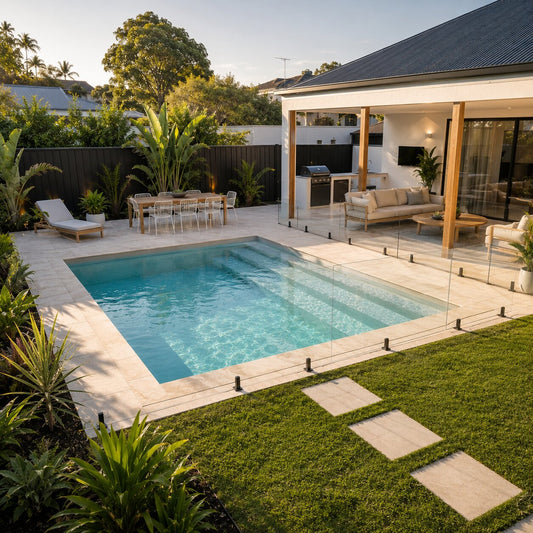
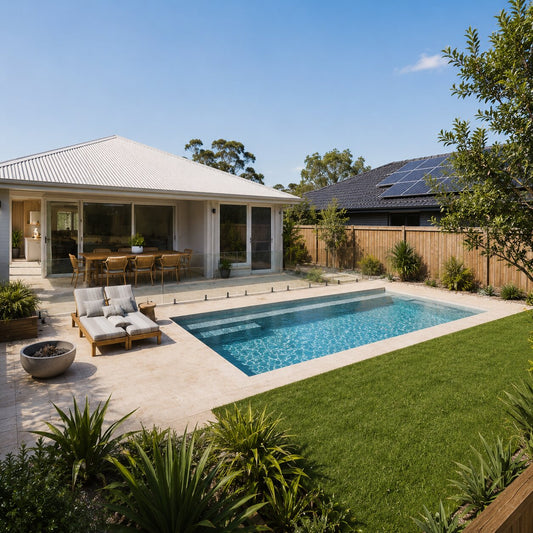
Paving is often the more practical all-rounder. It gives a clean, durable finish and can tie the pool area into the rest of the landscape with less fuss. If your backyard design includes pathways, entertaining zones, outdoor kitchens or retaining features, paving can create a more cohesive result.
For many homeowners, longevity is the biggest drawcard. Quality pavers installed on the right base can handle heavy use and weather exposure well. They are generally easier to maintain than natural timber decking and, if damage occurs, individual units can sometimes be replaced without redoing the whole area.
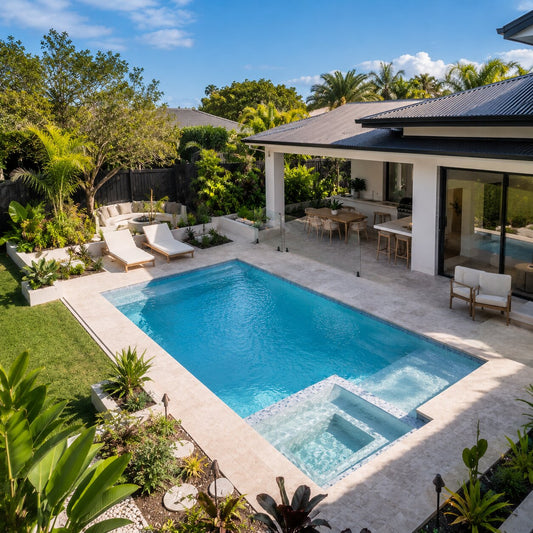
Paving also offers design range. You can go with large-format pavers for a sleek, modern look, natural stone for a premium finish, or more cost-conscious options that still present well. Colours, textures and laying patterns can shift the character of the whole pool area from classic to contemporary.
From a practical point of view, paving can also support strong drainage outcomes when designed properly. Around pools, water management matters. Surface runoff, stormwater planning and the relationship between paving levels and the pool shell all need to be considered from the start.
The trade-offs with paving
Heat is often the first concern. Some pavers, especially darker products, can become very hot under direct sun. Lighter tones and suitable materials can help, but this is one of the biggest reasons people hesitate over paving for pool areas.
The other factor is hardness. Paving feels more solid and permanent, which many homeowners like, but it is less forgiving underfoot than decking. If your family spends long days around the pool, that comfort difference can matter.
Installation quality is also critical. Poorly prepared bases, movement in reactive ground or inadequate drainage can cause pavers to shift, settle or stain over time. The finish may look simple, but the performance depends heavily on the groundwork.
Cost is important, but not in isolation
When clients weigh up decking vs paving around pool spaces, cost always comes into the conversation. The challenge is that upfront pricing rarely tells the full story.
Decking can be more expensive than standard paving depending on the product, structure and site conditions, especially if a raised system is required. Premium hardwoods and quality composite options also sit at different price points, so the range is broad.
Paving can be more economical in some applications, particularly on straightforward, level sites. But premium stone, intricate layouts, edge detailing and drainage works can push the investment up quickly. If excavation, retaining or access constraints are involved, either option can become more complex.
The better question is not simply which is cheaper. It is which gives you the right balance of finish, longevity and maintenance for the way you plan to use the space.
How Brisbane conditions affect the decision
Local climate and site conditions should always influence material selection. In Brisbane and across South East Queensland, intense UV, storms, humidity and seasonal downpours all test outdoor surfaces.
That means the best pool surround is not just the one that looks good on handover day. It is the one that still works after summers of bare feet, splashed chlorinated water, heavy rain and regular outdoor entertaining.
On some blocks, drainage and level changes will make one option more practical than the other. On others, the style of home may naturally suit paving, while a softer landscape-led design may call for decking. Where there are multiple outdoor elements to coordinate, a complete design-and-build approach usually leads to a better result than choosing the pool finish in isolation.
Which option is better for your pool area?
If your priority is warmth, texture and a resort feel, decking can be the better fit. It suits families who want the pool area to feel like a liveable extension of the home and are comfortable with the upkeep that may come with that choice.
If your priority is durability, lower maintenance and a stronger connection to surrounding hardscaping, paving is often the better long-term answer. It tends to suit homeowners who want a polished finish with practical performance and fewer ongoing maintenance demands.
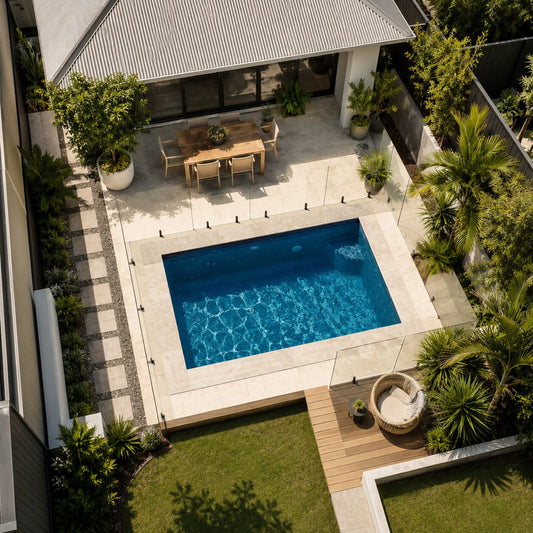
There is also a third answer that often works best - combining both. In many custom backyard projects, paving may be used for high-traffic circulation areas and outdoor living zones, while decking highlights a feature edge, seating nook or elevated transition. Used well, the contrast can improve both function and visual appeal.
For homeowners planning a new pool, the smartest decision usually comes from looking at the whole backyard, not just the coping line. The pool surround needs to respond to your home, your site and your lifestyle. That is where an experienced team can save a lot of second-guessing, especially on sloping or more complex Brisbane blocks.
At Wahoo, that broader thinking is a big part of getting the result right. When pool construction, landscaping, drainage and structural outdoor works are considered together, materials are chosen for how they perform as part of the full space, not just how they look in a sample.
A good pool finish should feel right on a summer morning, still look good years later and make the whole backyard easier to enjoy. If you start with that in mind, the right answer between decking and paving usually becomes much clearer.