Best Materials for Pool Coping Explained
AdminA pool can look outstanding on the plans and still feel wrong underfoot once summer hits. Coping is one of those details that homeowners often leave until late, yet it affects comfort, safety, appearance and long-term maintenance every single day. If you are weighing up the best materials for pool coping, the right choice depends on more than looks alone. In Brisbane conditions, heat, slip resistance, durability and how the coping ties into the rest of your landscape all matter.
Pool coping is the finished edge around the top of the pool shell. It frames the waterline, protects the pool structure and creates the transition between the pool and the surrounding paving or deck. Because it sits right where people enter, sit and walk, it has to work hard. That is why the best result usually comes from choosing coping as part of the wider pool and landscape design, not as an afterthought.
What makes the best materials for pool coping?
There is no single material that suits every pool. The best option for a compact plunge pool in an inner-suburban courtyard may be different from what works for a large family pool on a sloping block. Good coping should stay comfortable in the sun, provide grip when wet and stand up to pool chemicals and weather exposure.
It also needs to suit the overall finish of the project. A highly contemporary home may call for crisp lines and large-format stone or porcelain, while a softer garden setting might suit a more natural finish. Budget plays a role as well, but cheap coping can be expensive if it stains easily, gets too hot or needs replacing earlier than expected.
When we talk clients through coping selections, we usually bring the conversation back to five practical considerations: temperature underfoot, slip resistance, maintenance, visual style and how the material performs over time in outdoor Queensland conditions.
Natural stone pool coping
Natural stone remains one of the most popular choices for premium residential pools, and for good reason. It offers a timeless finish, strong resale appeal and a broad range of colours and textures. Not all stone performs the same way, though.
Travertine
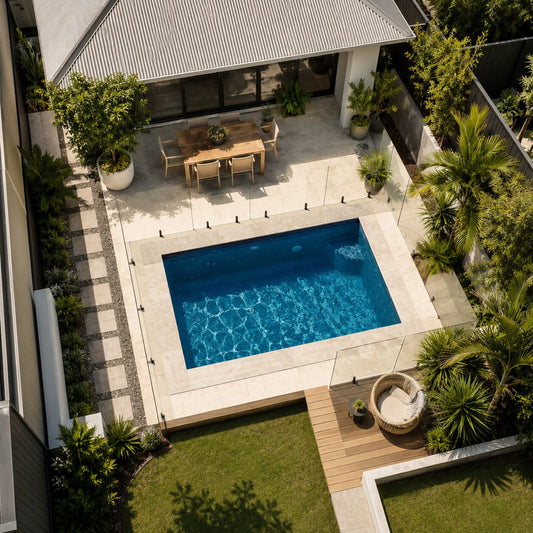
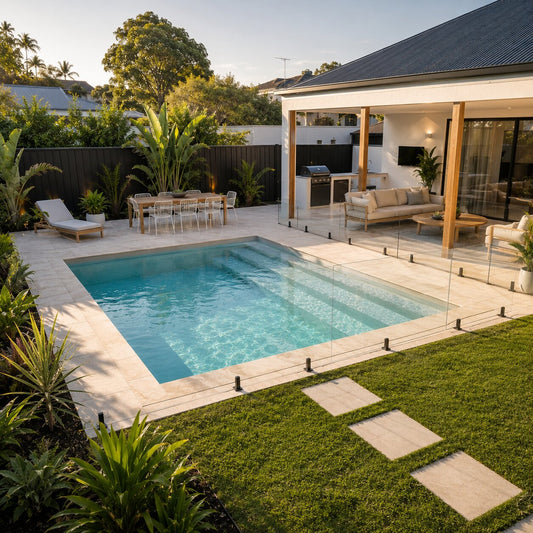
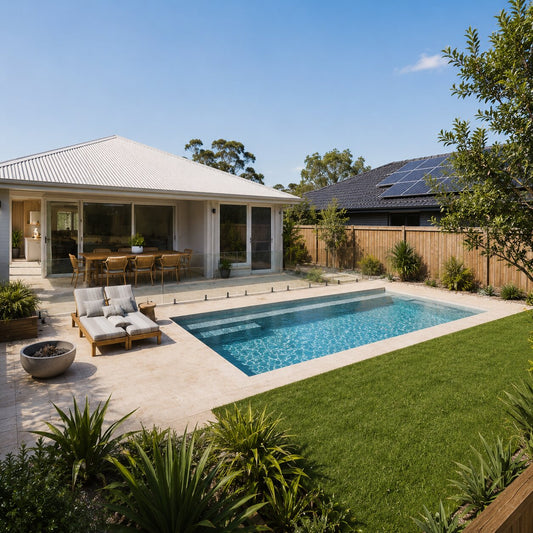
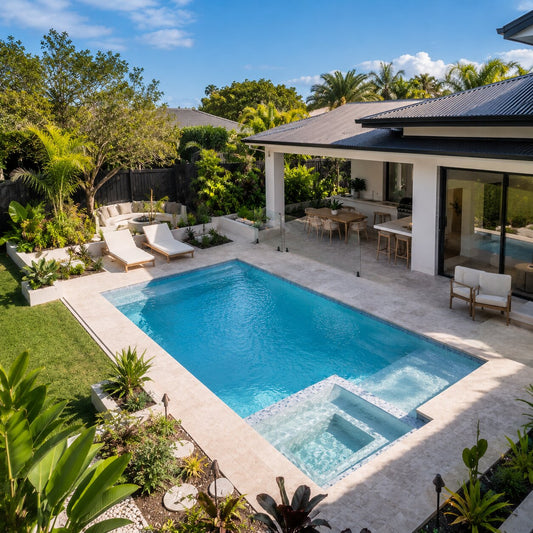
Travertine is often high on the list when homeowners ask about the best materials for pool coping. It has a light, elegant appearance and generally stays cooler underfoot than many darker materials, which is a real advantage in Brisbane summers. It also has a naturally textured surface that can provide good grip.
The trade-off is maintenance. Travertine is porous, so it should be properly sealed and looked after to reduce the risk of staining and water absorption. It is an excellent option for many homes, especially where a classic or resort-style look is the goal, but it does need the right installation and ongoing care.
Limestone
Limestone gives a refined, high-end finish and works beautifully in both contemporary and traditional outdoor spaces. It can feel softer and more understated than some other stones, which suits homeowners looking for a clean, sophisticated palette.
Its main consideration is durability in harsh conditions. Some limestones are more porous and more vulnerable to weathering than denser stone products. Product selection matters here. A suitable grade, installed correctly and sealed where needed, can perform very well, but not every limestone is ideal for every pool setting.
Granite
Granite is dense, hard-wearing and highly durable. If you want a coping material that handles wear extremely well, granite is a strong contender. It suits modern homes particularly well and can provide a sharp, architectural edge.
The downside is heat. Darker granites can become hot in direct sun, and polished finishes are not appropriate around pools. A flamed or textured finish is generally a better choice for slip resistance. Granite can be a very strong long-term option, but it needs careful colour and finish selection.
Sandstone
Sandstone has an unmistakably Australian feel and can suit relaxed outdoor spaces beautifully. It works well where the landscape design leans natural and warm rather than ultra-minimal.
That said, sandstone is softer and generally more porous than denser stone products. It can weather attractively, but it may also mark and wear more quickly in high-use areas. For some homeowners that patina is part of the appeal. For others, especially those wanting a lower-maintenance finish, another material may be a better fit.
Concrete pool coping
Concrete is a versatile and cost-effective option, and it can work across a wide range of pool styles. It is especially useful when you want flexibility in shape, edge detail and colour.
Precast concrete coping units offer consistency and can be manufactured in bullnose, square-edge and other profiles. Poured in situ concrete can create a clean, integrated look, particularly in modern designs. Concrete also pairs well with matching paving, which helps create a cohesive finish around the pool.
Its main strengths are value, versatility and availability. The trade-offs are that concrete can heat up, can crack if movement is not managed properly and may need sealing depending on the finish. In well-designed projects, these issues can often be reduced through the right engineering, substrate preparation and installation detail.
For many family backyards, concrete coping strikes a sensible balance between performance, appearance and budget.
Porcelain and tiled coping
Porcelain has become increasingly popular in high-end outdoor projects because it delivers a very crisp, contemporary finish with excellent consistency. It is available in stone-look, concrete-look and minimalist styles, so it gives homeowners plenty of design control.
A quality exterior-rated porcelain product is dense, low-porosity and relatively easy to maintain. It resists staining well and can be a practical choice where homeowners want clean lines and less ongoing upkeep than some natural stones.
The key is using the right product and edge detail. Not all tiles are suitable for coping, and slip resistance is critical. Poorly chosen tile finishes can be dangerous when wet, and badly detailed edges can look second-rate very quickly. When selected and installed properly, porcelain coping can look outstanding, especially alongside modern homes and structured landscape designs.
Which pool coping material is best for Brisbane homes?
For Brisbane and South East Queensland homes, lighter-coloured materials tend to perform better from a comfort point of view because they absorb less heat. That is why travertine, selected limestone and light-toned concrete products are often popular. But climate is only one part of the picture.
If your pool area gets full western sun, heat performance should carry more weight in the decision. If your priority is a luxury architectural finish, granite or porcelain may be worth a closer look. If you are building a complete backyard and want a practical, cost-conscious solution that still looks polished, concrete can make a lot of sense.
Site conditions also matter. On sloping blocks or more complex builds, coping should never be treated as just a surface choice. Movement, drainage, surrounding retaining works and how the coping integrates with paving and landscaping all affect the final result. This is where an experienced pool and landscape builder adds real value. It is not only about selecting an attractive material. It is about making sure the whole outdoor space performs properly.
How to narrow down the best materials for pool coping
The smartest way to choose coping is to look at samples in natural light and compare them against your pool tile, house exterior and surrounding paving. A material that looks perfect in a showroom can feel very different outdoors at 2 pm in January.
It also helps to be honest about maintenance. Some homeowners are happy to reseal natural stone and keep a close eye on presentation. Others want a finish that is more forgiving with kids, entertaining and daily use. Neither approach is wrong, but your coping should match how you actually live.
Budget should be considered over the full life of the project, not just the upfront supply cost. A cheaper material that feels hot, looks dated too quickly or requires more maintenance may not be the better value in the long run.
For homeowners planning a full outdoor transformation, coping should be chosen alongside fencing, paving, retaining, drainage and planting. The best results come when every element is designed to work together. That is often where a single specialist team, such as Wahoo Pool & Landscape Construction, can make the process far more straightforward and the outcome far more cohesive.
The right coping does not need to be the most expensive option in the range. It needs to suit your pool, your home and the way your family will use the space for years to come. When you get that balance right, the edge of the pool stops being a small detail and becomes part of what makes the whole backyard feel finished.