Pool Fencing Compliance Questions Answered
AdminYou usually do not start thinking about pool fencing until the exciting part is underway - the shell is going in, the landscaping is taking shape, and suddenly someone asks whether the gate swings the right way. That is when pool fencing compliance questions become urgent, because getting this part wrong can delay handover, trigger extra costs, and create safety risks no homeowner wants around their family.
For Brisbane and South East Queensland homeowners, pool fencing is not just a finishing touch. It is a legal safety requirement, and it needs to work with the layout of your pool, the levels across your block, nearby structures, and the way your family actually uses the space. A fence that looks great on paper can still become a problem if a retaining wall changes climbable zones or a gate latch ends up too accessible for young children.
Why pool fencing compliance questions matter early
One of the most common mistakes homeowners make is leaving fencing decisions too late. By that stage, the pool position, paving levels, garden beds, steps, and alfresco layout may already be locked in. If the fencing solution then needs changes to satisfy compliance, those adjustments can be awkward and expensive.
This is especially true on sloping Brisbane blocks, where level changes can affect how fence height is measured and whether adjoining surfaces become climbable. A fence that seems compliant from one side may not be compliant from another. The same issue can arise with raised planters, bench seating, retaining walls, pump enclosures, or decorative screening placed too close to the barrier.
When fencing is considered as part of the complete pool and landscape design, there is more flexibility to get safety, presentation, and practicality right from the start. That usually means fewer surprises at inspection time and a smoother path to completion.
The pool fencing compliance questions homeowners ask most
A lot of compliance concerns boil down to a few recurring questions. The first is usually about height. Homeowners want to know how high the fence needs to be, but the more useful question is how that height is assessed across the entire barrier zone. Measurement points matter, and so do any nearby objects a child could use for climbing.
The next big question is about gates. Pool gates generally need to be self-closing and self-latching, and they need to open in the required direction. If the gate drags, sticks, or fails to latch consistently, it can create compliance issues even when the fence itself is otherwise sound. Many problems come from installation tolerances, ground movement, or poor coordination with paving levels.
Boundary fences also cause confusion. Some homeowners assume an existing side or rear boundary fence can automatically form part of the pool barrier. Sometimes it can, but it depends on the specific layout and whether that fence, adjoining access points, and nearby structures meet the applicable requirements. An older timber fence may be acceptable in one scenario and unsuitable in another.
Windows and doors are another area where assumptions can cause trouble. Depending on the design and the applicable standard or approval pathway, openings from the house to the pool area may need specific treatment. This is one reason compliance should never be reduced to general advice from a neighbour or a quick online search. The right answer depends on your exact property and approval conditions.
Compliance is about more than the fence itself
A compliant pool barrier is really a compliant pool area. That distinction matters. The fence, gates, hardware, surrounding ground levels, nearby fixtures, and access points all need to work together.
For example, a beautiful glass fence may satisfy visual goals and preserve sightlines across the yard, but if outdoor furniture, filter equipment, pot plants, or storage boxes end up too close, the barrier may no longer function as intended. The same applies to landscaping choices. Dense planting can soften the look of a fence, but poorly placed elements can interfere with gate operation or create climb points over time as the garden matures.
This is where integrated planning becomes valuable. Pool fencing should not be treated as an isolated trade turning up at the end. It needs to align with paving, drainage, retaining, planting, and the way people move through the backyard. That is often the difference between a barrier that merely passes inspection and one that feels like a natural part of a well-designed outdoor space.
Glass, aluminium, and boundary solutions
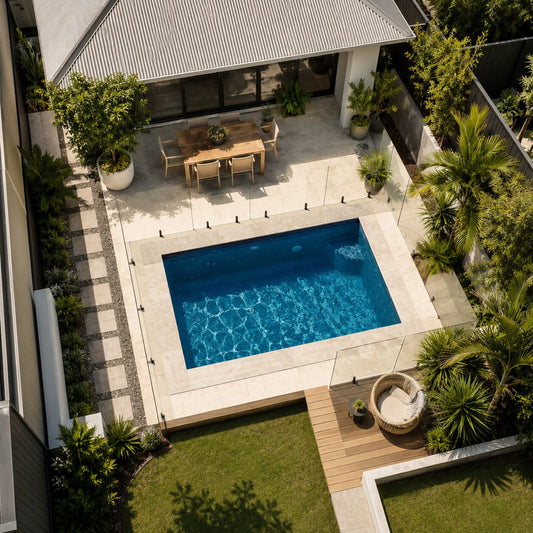
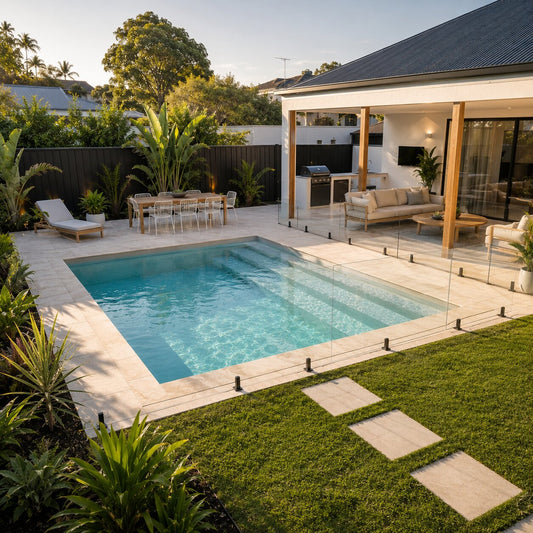
Most homeowners are balancing three things at once - compliance, appearance, and budget. Frameless or semi-frameless glass fencing is popular because it keeps views open and gives the pool area a high-end finish. It suits contemporary homes particularly well, but it can come at a higher cost and may need more regular cleaning to keep it looking sharp.
Aluminium fencing is often a practical and cost-effective choice. It can suit a wide range of home styles and tends to be durable in Queensland conditions when selected and installed properly. It may not disappear visually in the same way glass does, but it can offer excellent safety performance and strong long-term value.
Boundary-based solutions can also be part of the answer, particularly on tighter blocks, although they need careful review. What saves space in one yard can create complications in another, especially if neighbouring levels differ or future maintenance access is not well thought through. There is rarely a one-size-fits-all answer, which is why the best fencing option is the one designed around your site rather than copied from another project.
Common issues that can affect compliance later
Passing inspection at completion is only one part of the job. Pool barriers must remain compliant over time, and this is where some homeowners get caught out. Gates can shift slightly as hardware wears or surrounding surfaces move. Latches can become less reliable. Landscaping can grow into the fence line. New additions like storage units, decorative screens, or children’s play equipment can unintentionally create climbable access.
Renovations can also change the compliance picture. A new deck, garden edging, bench seat, or retaining wall might seem unrelated to pool safety, but if it sits within the barrier zone it can alter how the fence performs. Even replacing a boundary fence without considering the pool area can create new issues.
That is why it pays to think beyond the initial certificate. A good fencing solution should be practical to maintain and sensible for the way your household lives. If a gate is awkward for daily use, people are more likely to prop it open. If the layout pushes furniture into the barrier zone, compliance becomes harder to maintain. Practical design supports safer habits.
Why experienced project coordination makes a difference
Homeowners often ask whether they should handle fencing separately or leave it to the builder managing the broader project. The answer depends on how simple or complex the site is. On a straightforward block, a separate fencing contractor may be enough. On a custom pool build with landscaping, retaining, drainage, paving, and level changes, fragmented coordination can create unnecessary risk.
When one team oversees the wider backyard transformation, there is a better chance the fence height, gate set-out, surrounding finishes, and access paths are considered together. That can reduce rework, avoid clashes between trades, and keep the final result cleaner both visually and technically.
For families investing in a custom outdoor area, that joined-up approach usually brings peace of mind. It is easier to enjoy the process when the practical details are handled properly, not left as a last-minute compliance scramble.
Getting clear answers before construction starts
If you are in the early planning stage, the best time to raise pool fencing compliance questions is before final design and construction decisions are locked in. Ask how the barrier will interact with levels, gates, retaining walls, boundary fences, landscaping, and nearby structures. Ask who is checking the details and how compliance will be considered through the project, not just at the end.
A professional builder with genuine experience in complete pool and landscape construction should be able to explain the likely requirements clearly, flag site-specific issues early, and design a solution that does not compromise the look or usability of the space. That is the difference between simply installing a pool and creating a backyard that works properly from every angle.
At Wahoo Pool & Landscape Construction, we see pool fencing as part of the overall outcome, not an afterthought. When the fence, pool, and landscape are designed together, the result is safer, better looking, and far less stressful for the homeowner.
If you are weighing up design ideas or trying to avoid costly changes later, the smartest move is to ask the compliance questions before the concrete goes in. A well-planned fence does more than satisfy regulations - it protects your family and helps the whole backyard feel finished for the right reasons.