Spa Installation for Backyards Done Right
AdminA backyard spa can look simple from the outside - a compact feature, warm water, a place to unwind at the end of the day. What most homeowners discover pretty quickly is that good spa installation for backyards is never just about dropping a shell into place. It is about how the spa sits within the block, how it connects to the home, how it drains, how it is powered, and whether the finished space actually feels easy to use.
That matters even more in Brisbane and South East Queensland, where blocks vary widely and many homes have sloping sites, tight side access, retaining needs or bigger outdoor living plans already on the wish list. When a spa is planned properly from the start, it becomes part of a complete outdoor environment. When it is treated as an afterthought, it can create layout compromises, service issues and extra cost that could have been avoided.
What good spa installation for backyards really involves
Homeowners often start with the spa itself - size, shape, seating, jets and appearance. Those details matter, but they are only one part of the decision. The bigger question is how the spa will function in the backyard over time.
A well-executed installation should make access comfortable, integrate with paving and landscaping, allow for maintenance, meet safety requirements and suit the way your family uses the space. If the spa is close to an alfresco area, it should feel connected. If it is part of a broader pool and landscape project, it should look intentional rather than added on later.
This is where experience counts. A spa may be smaller than a swimming pool, but the planning can still be complex. Site preparation, structural support, electrical work, plumbing, drainage, fencing and finished levels all need to line up. On sloping blocks, those considerations become even more important.
Choosing the right spa location
The best location is not always the most obvious one. A spa tucked into a far corner might seem neat on paper, but if it feels exposed, awkward to reach or disconnected from the house, it may not get used nearly as often as you expect.
In most backyards, the ideal position balances convenience, privacy and design. People tend to use a spa more when it is easy to step out to in the evening, close to a covered area, and visible enough to feel part of the home without being fully on display. Sightlines from inside the house also matter. A spa can become a strong visual feature, especially when paired with quality paving, retaining, planting and lighting.
Sun, wind and drainage should also shape the decision. Too much exposure can make the surrounding area uncomfortable in summer, while strong prevailing breezes can affect comfort during cooler months. In Brisbane conditions, it pays to think about how the space feels across the year, not just on a perfect inspection day.
In-ground, raised or integrated?
One of the first design choices in spa installation for backyards is whether the spa should be in-ground, partially raised or fully raised. Each option can work well, but each suits different sites and budgets.
An in-ground spa usually creates the most streamlined look. It can sit neatly within paving and landscape works and often feels more premium, particularly when integrated into a broader outdoor design. The trade-off is that excavation, structural requirements and service coordination may be more involved.
A raised spa can become a feature in its own right. It may suit sloping sites, help define zones within the backyard and create opportunities for spillways, bench seating or visual separation between spaces. It can also offer a practical solution where level changes are already part of the design.
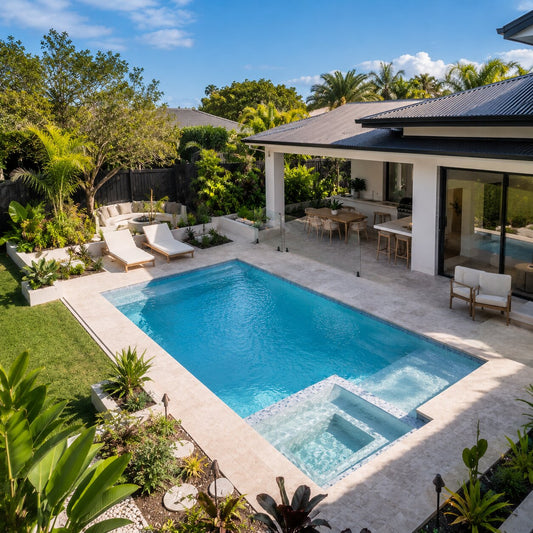
An integrated spa alongside a swimming pool is another common choice. This approach can deliver a cohesive result, especially when the pool, spa and surrounding landscape are designed together. The advantage is consistency in materials, finishes and layout. The key is making sure both features work independently and do not compromise circulation or usable entertaining space.
Site conditions can change the whole project
No two blocks are the same, and site conditions often shape the build more than homeowners expect. Access is a common issue. If machinery cannot easily reach the backyard, excavation and material movement may take longer or require a different approach. That can affect programme, labour and cost.
Sloping blocks add another layer. The spa may need retaining walls, engineered support or careful level changes to sit correctly within the yard. Drainage becomes critical too. Water needs to move away from structures and paved areas in a controlled way, particularly during heavy Queensland rain.
Soil conditions also matter. Ground movement, rock and fill can all influence excavation and construction methods. This is one reason a thorough site assessment is so important before final design and pricing are locked in. It gives homeowners a clearer picture of what is realistically achievable on their block.
Services behind the scenes
The finished spa might look calm and simple, but there is a fair bit happening behind the scenes. Power supply needs to be planned properly. Plumbing runs, filtration equipment and access for servicing all need to be considered early, not squeezed in at the end.
Equipment placement deserves more attention than it usually gets. Homeowners want the system close enough to operate efficiently but far enough away to protect the look and feel of the entertaining area. Noise, ventilation and service access all matter. A tidy backyard can quickly lose its appeal if pumps and equipment are exposed or awkwardly positioned.
Drainage around the spa is just as important as drainage within it. Splash-out, stormwater and runoff from surrounding areas need to be managed so the space remains safe and durable. This is particularly relevant where paving, retaining walls and garden beds sit close to the installation.
Why a complete backyard approach usually delivers better results
A spa on its own can be a strong addition, but the best outcomes usually come when the installation is considered as part of the whole backyard. That means thinking beyond the shell to the paving, tiling, fencing, planting, lighting and usable living areas around it.
This approach is often more efficient as well. When one specialist team manages the broader project, decisions can be coordinated from the outset. Finished levels align, materials are selected as a package, and structural works are less likely to clash with later landscape plans. It also reduces the stress that comes from juggling separate trades, timelines and responsibilities.
For homeowners investing in a quality outdoor upgrade, that joined-up delivery makes a real difference. Instead of ending up with a spa that feels inserted into the yard, you get a space that feels designed for the way you live.
Budget expectations and where costs can move
Budget is always part of the conversation, and rightly so. Spa installation costs can vary significantly depending on the type of spa, the site, the level of integration and the finishes around it. The spa itself is only one line item.
Excavation, access constraints, retaining, drainage, electrical works, paving and compliance requirements can all shift the total project cost. So can upgrades such as built-in seating, feature tiling, lighting and linked entertaining areas.
This does not mean the process has to feel unpredictable. It means the most useful early conversations are honest ones. A realistic budget, paired with a proper site assessment, helps shape options that fit both the block and the brief. Sometimes a simpler layout delivers the best value. In other cases, spending more upfront on integrated works avoids rework later.
What to look for in a spa builder
Not every contractor approaches spa projects with the same level of planning. For homeowners, the safest path is to choose a builder who understands more than the spa itself. They should be able to assess the block properly, explain structural and service requirements clearly, and show how the spa fits into the wider outdoor environment.
Local experience matters. Brisbane sites come with their own conditions, from sloping terrain to stormwater challenges and council considerations. A builder with engineering capability and end-to-end outdoor construction experience is better placed to manage those realities without turning the project into a drawn-out headache.
That is why many families prefer a complete design-and-build team rather than trying to piece the job together themselves. At Wahoo Pool & Landscape Construction, that whole-of-backyard approach is central to how projects are delivered - with one experienced team managing design, construction and the finishing details that make the space feel complete.
Planning now for long-term enjoyment
The best spa projects are not the ones that simply look good on handover day. They are the ones that still feel easy, comfortable and worthwhile years later. That comes down to thoughtful planning at the start - the right position, the right structural approach, the right surrounding finishes and the right team delivering it.
If you are considering spa installation for backyards, it pays to think bigger than the spa alone. A well-designed space should suit your home, your block and the way your family actually lives. Get that right, and the spa becomes more than a feature - it becomes one of the most used and valued parts of the backyard.